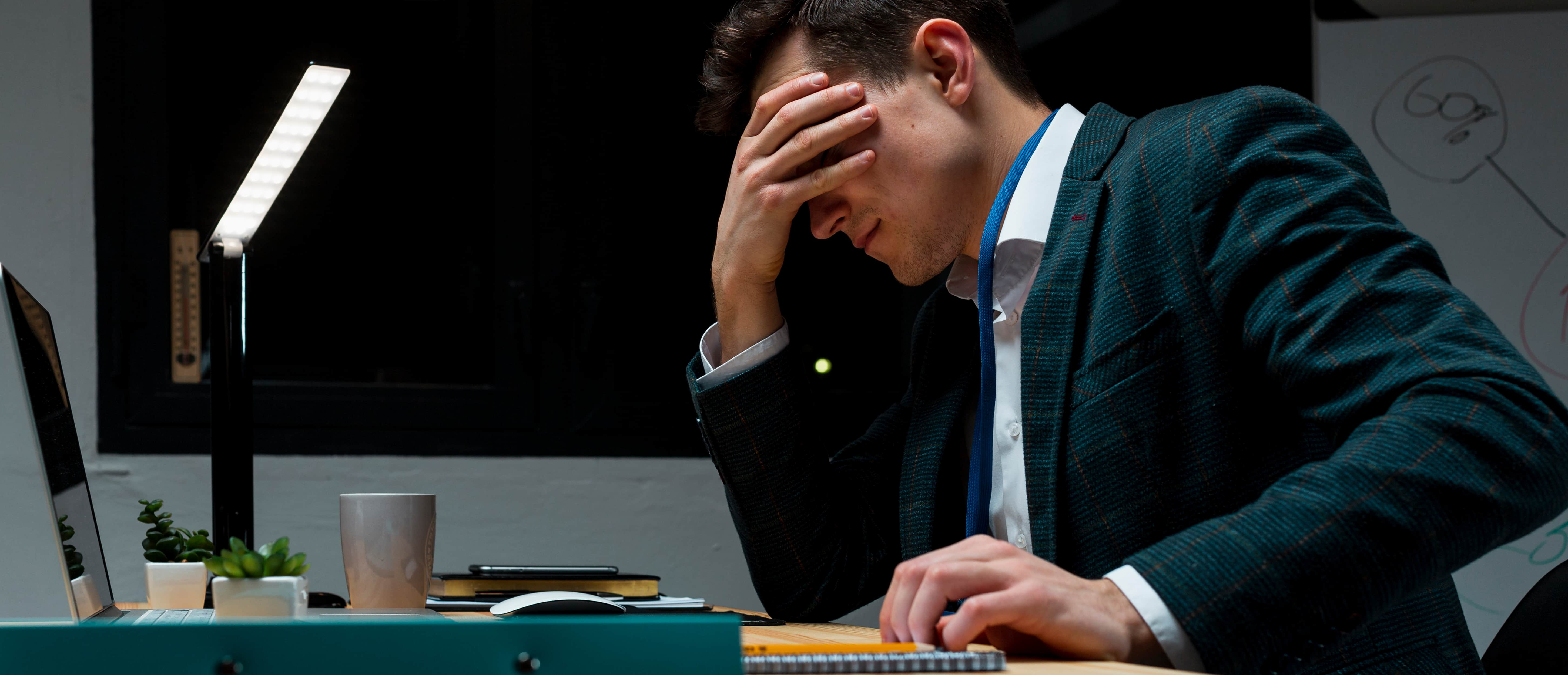
Many Indian employees stay silent about their mental health at work because they fear judgment, career setbacks and doubts about confidentiality. This blog explains the six main reasons behind that silence, what it can cost people and teams, and the myths that keep stigma alive. It also gives HR teams and managers practical steps to build a workplace where asking for support feels safe.
From the outside, most employees look fine. They attend meetings, answer emails and meet deadlines. Yet some are managing stress, anxiety or emotional exhaustion they do not feel safe discussing. In discussions of mental health at the workplace in India, that silence is rarely a simple personal choice: people worry about being judged, misunderstood or passed over if they speak up.
This concern deserves attention. Deloitte's 2024 Women @ Work: India report found that only 33% of the 500 women surveyed in India felt comfortable talking about their mental health in the workplace. This finding relates specifically to women respondents in that survey; it should not be read as a figure for all Indian employees.
“33% of Indian women surveyed said they felt comfortable talking about their mental health in the workplace.
Understanding why employees stay silent is an important step towards creating workplaces where people feel respected, supported and able to seek help.
Mental health stigma at work means negative attitudes, assumptions or discriminatory behaviour towards people experiencing mental health challenges. Because these challenges are often invisible, an employee can keep performing while struggling privately. Stigma can show up as:
Employees hold back because of fear of judgment, career concerns, workplace expectations, doubts about confidentiality and limited awareness of support. These factors can make people hesitate even when they know they need help.
| Reason | How it shows up | What employers can do |
|---|---|---|
| Fear of judgment | Worry about being labelled weak or overly sensitive. An employee with anxiety quietly works around a hard task rather than explain it. | Talk about mental health as openly as physical health, starting with leaders. |
| Career and job-security concerns | Fear that disclosure will change how performance, reliability or promotion potential is viewed. | State non-discrimination practices clearly and train managers to separate wellbeing from ratings. |
| Culture and expectations | Always-on, long-hours cultures make difficulty feel unacceptable. "Everyone has pressure" can shut a conversation down. | Review hours and workload norms; coach managers away from dismissive encouragement. |
| Pressure to look strong | Meeting every deadline while struggling. Productivity gets mistaken for wellbeing. | Do not use output as a proxy for wellbeing; invite check-ins regardless of performance. |
| Doubts about confidentiality | Fear that counselling details could reach HR, managers or colleagues. | Explain what is collected, who can see it and where confidentiality has limits. Never promise absolute secrecy where legal, clinical or safety exceptions apply. |
Deloitte's 2024 India report found that 19% of women who did not or would not feel comfortable disclosing mental health challenges as the reason for absence said they were concerned disclosure could adversely affect their career progression. This is a percentage within that specific subgroup, not 19% of all women surveyed.
“19% of Indian women who were uncomfortable disclosing mental health challenges as the reason for absence cited concern about the impact on career progression.
This helps explain why some employees choose to manage difficulties privately rather than risk being perceived differently at work.
Deloitte's 2025 Gen Z and Millennial Survey found that among Indian respondents who felt anxious or stressed, long working hours were identified as a major contributing factor by 52% of Gen Z respondents and 39% of millennials. These percentages refer to the stressed or anxious respondents asked about contributing factors, not to all Indian Gen Z and millennial employees.
“52% Gen Z | 39% Millennials - among Indian respondents who felt anxious or stressed, this share identified long working hours as a major contributing factor.
Making support available is only half the job. Even where an Employee Assistance Program (EAP) exists, employees may not use it if they are unsure it exists, how to reach it or whether it is private.
These outcomes are not inevitable and affect people differently. Supportive working conditions and access to appropriate care can make a meaningful difference.
| Myth | Reality |
|---|---|
| Mental health challenges are a sign of weakness. | They can affect people across backgrounds, professions and seniority, and do not make someone less valuable. |
| High performers do not struggle. | Performance does not reveal everything about a person's emotional wellbeing. |
| Employees should manage on their own. | Personal coping helps, but professional support can also be appropriate. Seeking help is not a failure. |
| Support is only for a crisis. | Support can help people understand concerns and manage stress before difficulties become more disruptive. |
Changes in behaviour are a prompt for a check-in, never proof of a condition. Managers should not try to diagnose, and the goal is not to monitor emotions but to make asking for help easier.
| What a manager might notice | A respectful way to open the conversation |
|---|---|
| Quieter in meetings or withdrawing from the team | "I've noticed you've been quieter lately. How are things going for you?" |
| Difficulty with familiar tasks | "This work seems heavier than usual. What would make it more manageable?" |
| Often saying they feel overwhelmed | "Thank you for telling me. What would help most right now?" |
| Asking for workload adjustments | "Let's look at priorities together, and I can share the support options available." |
Awareness works best as part of everyday practice, not an annual event.
Evidence suggests that workplace relationships and working conditions are associated with employee mental wellbeing. India's Economic Survey 2024-25 reported that individuals with the best manager and colleague relationships had Mental Health Quotient (MHQ) scores 33% higher than those with the worst relationships. It also reported a 27% higher MHQ score among people reporting the best workload conditions compared with those reporting the worst.
“33% higher | 27% higher - the Economic Survey reported higher MHQ scores for people with the best manager/colleague relationships and the best workload conditions, respectively, compared with those reporting the worst conditions.
These findings do not prove that one workplace factor alone determines mental health. They do reinforce the importance of supportive relationships and manageable working conditions.
Refill Health is an AI-assisted, human-led employee mental health platform designed to help organizations move beyond traditional Employee Assistance Programs towards structured, guided and measurable mental healthcare.
| Capability | What it does |
|---|---|
| Guided Care Navigation | Helps employees find the right support, from screening to therapy, coaching and self-guided care. |
| Clinical Screening and Assessments | Uses relevant clinical assessments to guide appropriate next steps. |
| Therapy and Coaching | Connects employees with professional therapy and ICF-certified coaching. |
| Self-Care and Micro-Learning | Builds awareness and practical wellbeing skills. |
| Manager Coaching and Support | Helps managers understand employee wellbeing and respond constructively. |
| Anonymised HR Insights | Shows workforce-level engagement, utilisation and outcomes without exposing individual care conversations. |
Anonymised HR insights can help organisations understand workforce-level trends without exposing individual conversations.
Fear of judgment, career consequences, doubts about confidentiality and limited awareness of support.
Indian research identifies stigma, confidentiality concerns and fear of professional repercussions as barriers. Experiences vary.
Culture shapes stress, belonging and willingness to seek help. Excessive workloads, weak management support and low psychological safety can all affect wellbeing.
Some employees fear it can. Non-discrimination practices, confidentiality safeguards and clear support processes help address the concern.
Communicate resources clearly, protect confidentiality, educate managers and make professional support easy to access.
Encourage respectful communication, listen to concerns, address stressors, prevent discrimination and let people ask for support without fear of retaliation.
Employees should not have to choose between protecting their professional image and acknowledging their mental health needs. Stigma, career worries and doubts about confidentiality can make silence feel easier. A healthier workplace is not one where people never struggle. It is one where they know they do not have to face it alone.
Explore how Refill Health can support your organization's workplace mental health initiatives.
Book a Demo| Limited awareness of support | Not knowing what is offered, how to access it, or how counselling differs from therapy or coaching. | Explain what exists, how to start and what to expect, repeatedly. |
© 2026 Refill Health Pvt. Ltd. All rights reserved.