
Three layers of care.
One Navigator. One measurable model.
Clinical therapy, coaching, and self-care in one platform. Every member isguided by a dedicated Care Navigator
A complete spectrum of support.

Self-care tools
Guided practices for the moment they're needed - available to everyone, from day one.

Professional coaching
For performance, transitions and leadership growth - where the need is developmental.
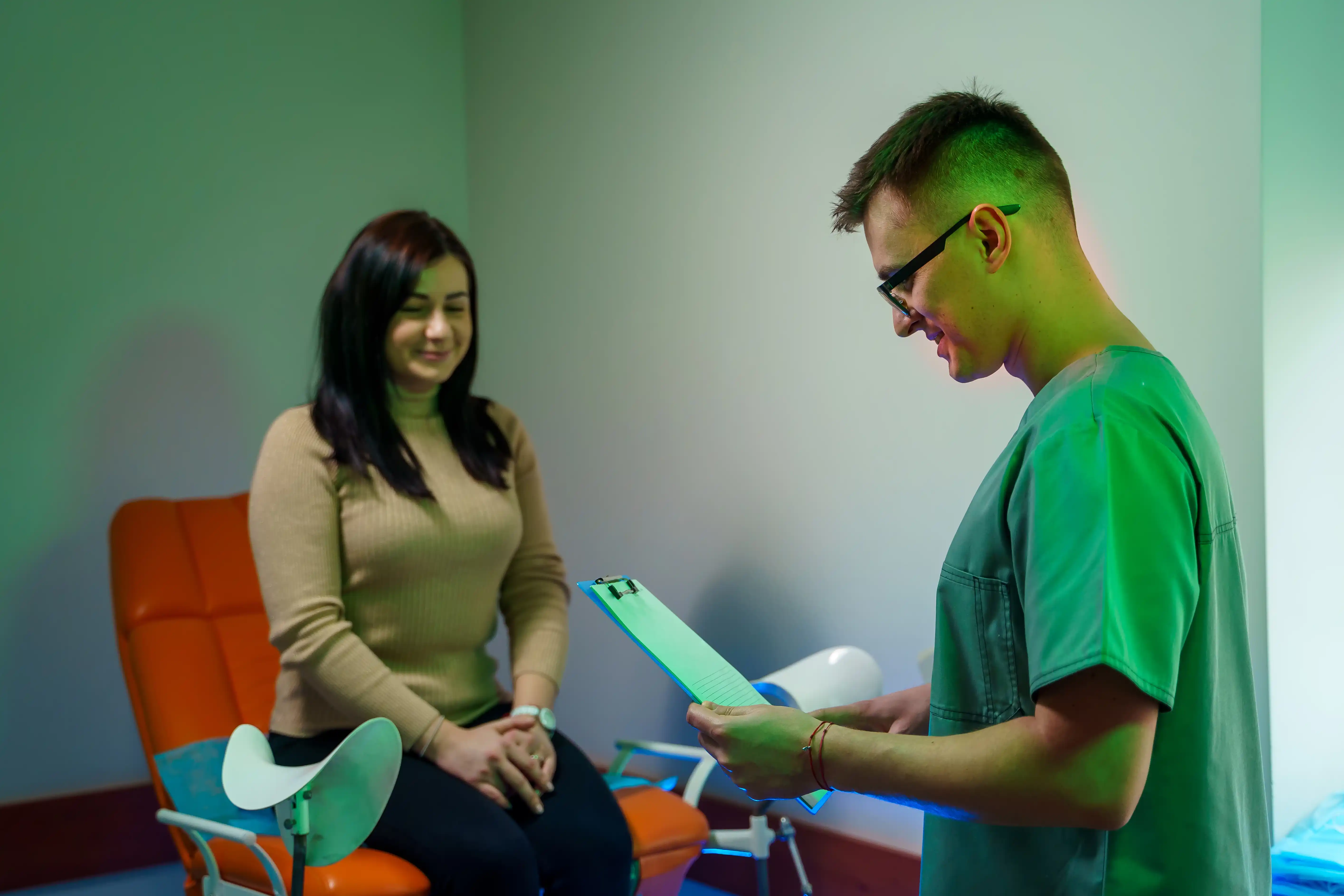
Clinical therapy
For diagnosable symptoms and clinically elevated scores - practitioner-led treatment.
Care Navigation runs across all three. One dedicated, clinically trained human - the constant thread connecting every layer.
The Program wasn't built to deliver outcomes.
Fragmented benefits, limited guidance, and no measurement create three gaps that most programmes never close.

People struggle to find the right support
Employees don't know whether they need a therapist, a coach, or simply a tool for a hard week. Faced with a directory and no guidance, most do nothing.
A dedicated Care Navigator interprets the assessment and walks each member to the right layer of care.

Programmes can't prove they worked
Utilisation reports say nothing about whether people improved. Organisations invest without knowing if anything changed - and find out about problems long after they could have acted.
Outcomes measured on every layer and surfaced in Refill Insights™ - with recommended action, not just numbers.

Care is fragmented and unowned
Therapists, coaches and digital tools sit in separate silos, with no shared record, no coordination, and nobody accountable for whether a person actually gets better.
One care plan, one shared view, one named Navigator accountable across all three layers.
Refill Health was built to close all three - through one model that runs self-care, coaching and therapy side by side, with a dedicated human making sure nobody falls between them.
Refill Health Provides Guided Outcomes Care.
A structured path, whichever track you're on.
Five stages. Both tracks travel the same spine - they diverge only at the point of care, and they rejoin at measurement.

Assessment
Validated instruments at onboarding, applied adaptively.

Matching
The engine recommends a therapist, a coach, or both.

Navigation
A Care Navigator confirms the plan and stays with the member.

Care
Self-care, coaching, therapy - alone or in combination.

Measurement
Every layer measured, every layer reported.
One dedicated Care Navigator spans all five stages.
The same person, from first assessment to sustained outcome - the reason members don't just start care, they finish it. The branch happens at Care - and only at Care. Assessment, matching, navigation and measurement are identical across all pathways.
Every member gets a dedicated care-navigator, not a portal.
This is the part most programmes don't have, and the reason ours works. Every member is assigned their own dedicated Care Navigator - a clinically trained professional who interprets the assessment, confirms the plan, and stays with them across every layer of care.
- Master's-level psychology or counselling
- Crisis-intervention certified
- Trained across clinical and coaching pathways
- Supervised by senior clinical leadership
One model. Three ways in.
Most people will never book a session and they still deserve support. So care isn't one door, it's three: always-on tools for everyone, coaching for growth, therapy for treatment.

Self-care tools
A comprehensive library of guided, clinically grounded practices available to every member from day one, with no booking, no waiting, and no one to tell. This is how care reaches the 90% who would never open a session.
Above the always on layer sit the two practitioner-led tracks. Coaching is not therapy with the clinical parts removed it is a separate profession with its own international credentialing body, competency framework and supervision model, and we hold it to that standard rather than a softer one.
Clinical therapy
Professional coaching
Same onboarding rigour. Same credential verification. Same supervision discipline. Same reporting into Refill Insights™. The standards differ because the disciplines differ - never because one matters less.
Parallel, not either therapist or coach.
A person is rarely only one thing. Someone managing anxiety may also be stepping into their first leadership role. Our model treats that as normal.

The engine recommends, the Navigator confirms
Onboarding assessments feed the recommendation engine, which proposes a therapist, a coach, or both - plus a matched self-care bundle. Every recommendation comes with alternates. The member chooses; the Navigator can override.

Layers stack, they don't queue
Tracks run in parallel, not in sequence - a therapist for clinical symptoms, a coach for a leadership transition, self-care tools between both. One care plan holds all of it, visible to everyone treating the member.

Escalation runs both ways
If clinical signals emerge in coaching, the coach escalates and the member is routed into therapy. Coaches are trained to hand over rather than hold on. As symptoms resolve, therapy steps down into coaching, then into self-care.

Nobody moves without a handover
A member never has to re-tell their story. Context travels with them between layers, carried by the Navigator - so changing track never means starting over.
The engine recommends, the Navigator confirms
Onboarding assessments feed the recommendation engine, which proposes a therapist, a coach, or both - plus a matched self-care bundle. Every recommendation comes with alternates. The member chooses; the Navigator can override.
Layers stack, they don't queue
Tracks run in parallel, not in sequence - a therapist for clinical symptoms, a coach for a leadership transition, self-care tools between both. One care plan holds all of it, visible to everyone treating the member.
Escalation runs both ways
If clinical signals emerge in coaching, the coach escalates and the member is routed into therapy. Coaches are trained to hand over rather than hold on. As symptoms resolve, therapy steps down into coaching, then into self-care.
Nobody moves without a handover
A member never has to re-tell their story. Context travels with them between layers, carried by the Navigator - so changing track never means starting over.
Every practitioner credentialed. Every practitioner supervised.
Refill Health is not a marketplace. Variability is the enemy of outcomes - supervision is how we remove it, on both tracks.
Credentialing
Supervision
Continuous development
Outcome monitoring
Different instruments. The same discipline of proof.
A therapy outcome and a coaching outcome are not the same thing, so we don't pretend one instrument measures both. Each track uses the measure its discipline recognises - and both report into the same place.

Measurement-based care
Validated instruments - PHQ-9, GAD-7 and condition-specific scales - administered before the clinician opens the session note. Score deterioration triggers an automatic Care Navigator alert; thresholds for clinical significance follow published standards.
ICF-aligned progress review
ICF-aligned goal and progress measures capture what coaching is actually for - goal attainment, capability shift, and sustained behaviour change - reviewed against the objectives set at engagement start.
Most programmes wait for a crisis. Ours sees it coming.
Measurement only matters if something happens because of it. AI and machine learning run across every stage of the model - not as a chatbot, but as the layer that watches continuously, so nothing is missed and nobody is forgotten.
Every member tracked
Progress is monitored continuously - not just in session. Score deterioration or quiet disengagement triggers an alert to the Care Navigator, who reaches out before the member has to.
Patterns become predictions
The platform learns which signals precede disengagement, relapse and crisis - surfacing risk while there's still time to act on it.
Insight becomes action
Every signal arrives with a recommended next step - for the member, for the Navigator, and for the organisation. Reporting that ends in a number is where most platforms stop.
Refill Insights™
For HR & benefit leadersA comprehensive organisation dashboard where benefit leaders see what the programme is actually doing - engagement, clinical and coaching outcomes, crisis activity, and measured ROI - with recommendations on what to do about it.
Four standards that hold on both tracks.
Clinical integrity comes first
Care recommendations are guided by clinical need and evidence - never by cost, capacity, or what is easiest to deliver.
Privacy is architectural
Individual data is protected by the design of the system, not by policy alone. Employers receive anonymised, aggregate insight - never individual records.
Nobody navigates care alone
Every member gets a named, dedicated Care Navigator. We don't hand people a directory and call it access - a human owns the relationship, on every layer, start to finish.
Supervision is not optional
Every therapist has clinical supervision. Every coach has ICF mentor coaching. Coaching is never allowed to drift into unlicensed therapy - and never treated as a lesser service.
Common questions about our approach
Everything you need to know about our model, care navigation, and how we measure success.
Refill Health's care model is built on three essential layers: Intelligence, Human Care Navigation, and a Spectrum of Support. We believe in providing guided care through a structured, five-stage path - Assessment, Matching, Navigation, Care, and Measurement - ensuring no one falls through the cracks.
Every member is paired with a dedicated Care Navigator who stays with them from their first assessment to a sustained outcome. Having a single human point of contact is the primary reason our members don't just start care - they finish it.
We use validated clinical instruments at onboarding, applied adaptively. Based on these assessments, our intelligence engine recommends the most effective combination of a therapist, a coach, or self-guided care to match the member's specific needs.
We provide a full spectrum of support, from self-care and coaching to clinical therapy. Both clinical and sub-clinical tracks travel the same structural spine - they only diverge at the point of actual care and rejoin at the measurement stage.
Measurement is deeply embedded into our model. Every layer of care is continuously measured and reported. This ensures that care is effective, outcomes are sustained, and we can validate the impact across all pathways.
Three layers of care. One human who owns it.
One system that sees it coming.
Book a working session with our team - we'll walk through the model, the instruments, and the evidence behind every layer.